Helping Researchers Communicate Like Founders
Supporting Academic Founders Through the Data-Driven Innovation Fellows Programme, The University of Edinburgh
At Koda Konsult, we work with ambitious researchers and technical founders at the earliest stages of their commercialisation journey, helping them bridge the gap between academic thinking and entrepreneurial communication.
As part of the Data-Driven Innovation (DDI) Fellows Programme, we delivered a tailored storytelling and venture communication initiative designed to help the 9 fellows better articulate the value of their ideas, communicate with confidence, and begin shaping the foundations of their future companies.
The Challenge
Many researchers and academics are experts in their fields, but communicating innovation in a startup or investment context requires a fundamentally different mindset.
Academic communication often prioritises precision, detail, caution, and evidence. Startup communication, on the other hand, requires clarity, conviction, accessibility, and momentum.
For many DDI fellows, this was their first exposure to thinking about their research not only as a technical achievement, but as a proposition with commercial and strategic value.
Common challenges included:
Difficulty simplifying complex ideas for non-technical audiences
Limited confidence in talking about themselves and their ambitions
Unclear value propositions or commercial pathways
A tendency to focus on features or technical detail rather than outcomes and impact
Limited experience with pitching, storytelling, or venture thinking
The programme cohort included Zak Campbell-Lochrie, Tara Capel, Ella Campbell-McGeachan, Daria Melashenko, Claire Sowton, Alec Wright, Chang Liu, Dimitrios Doudesis, and Javier Tejera.
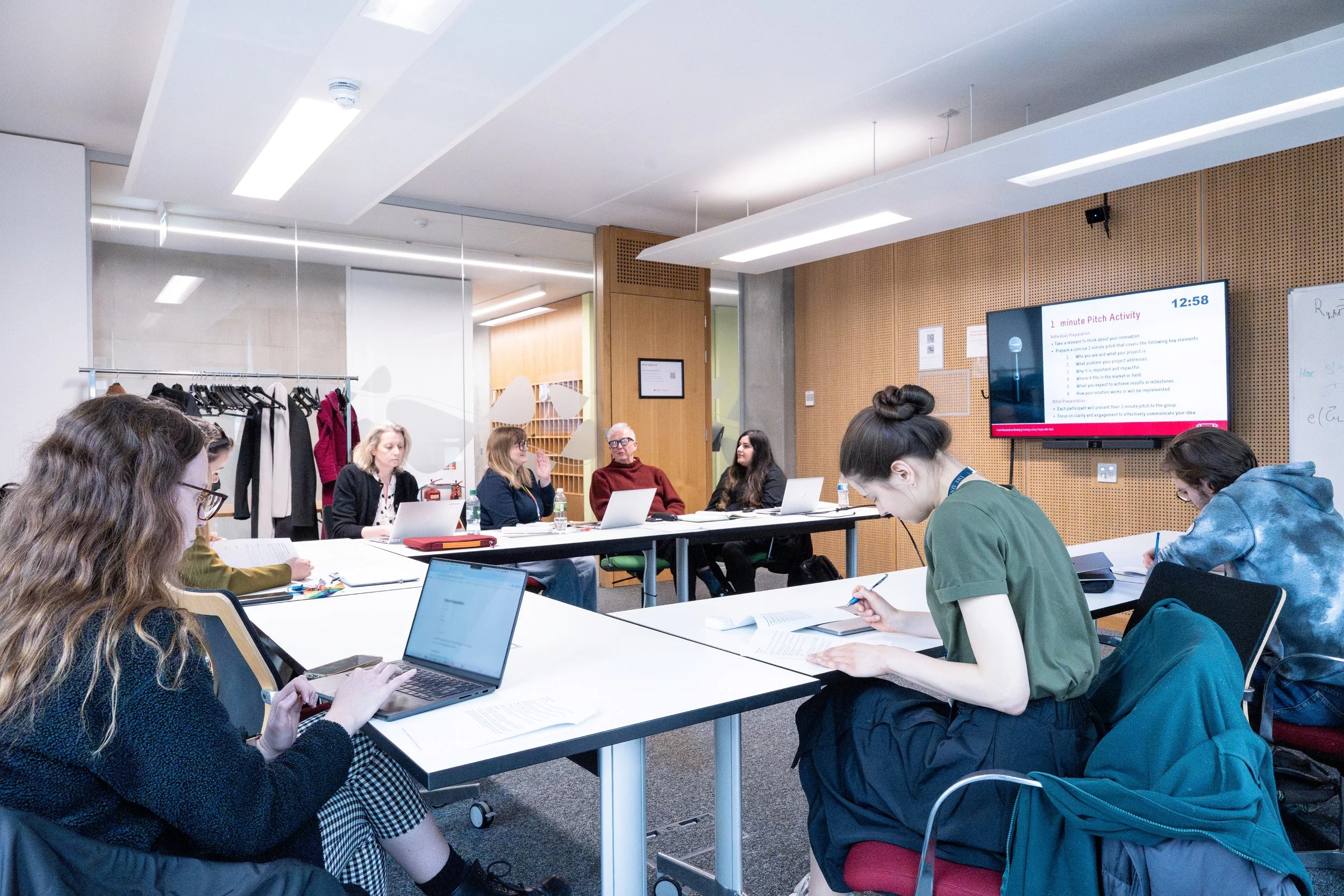
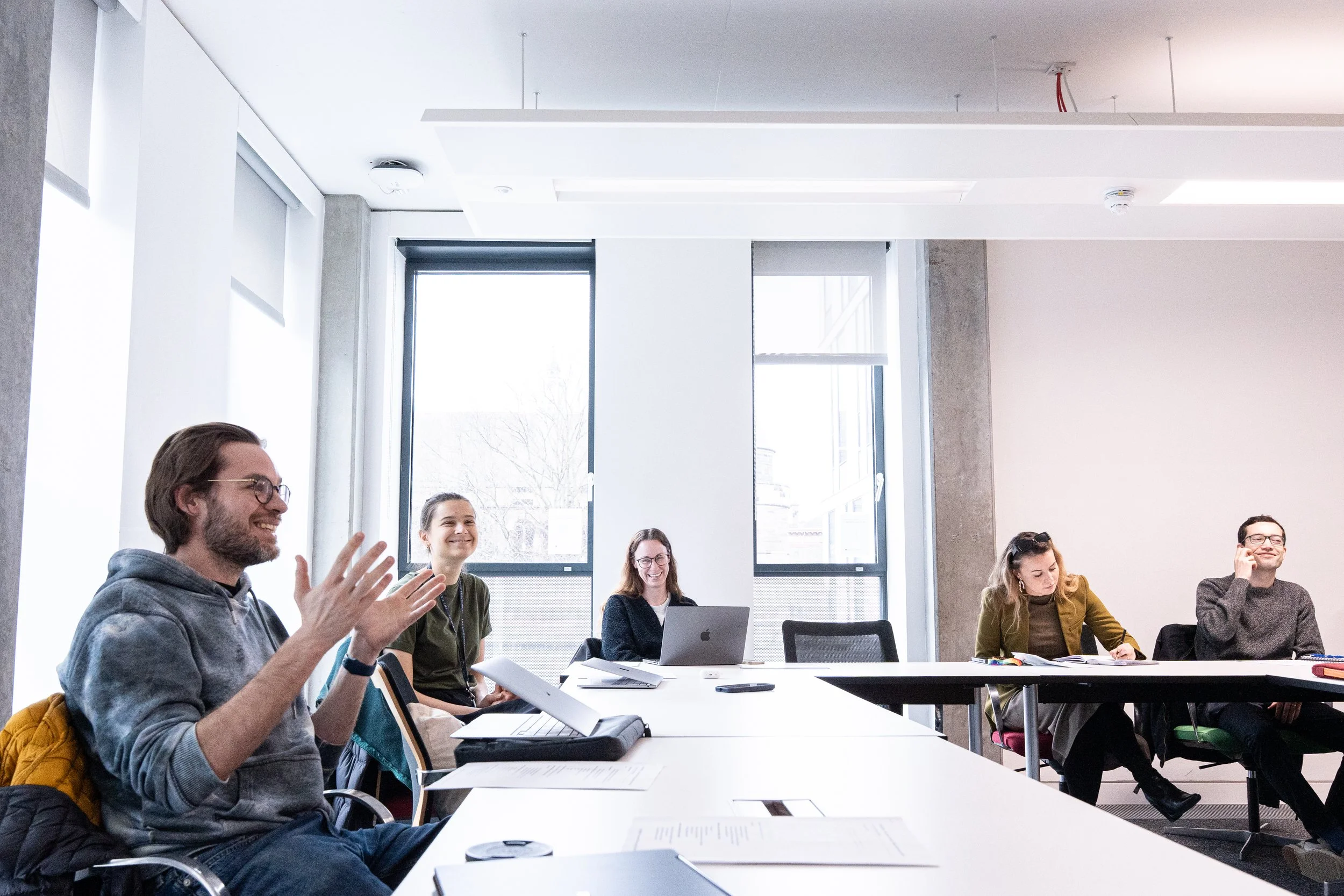
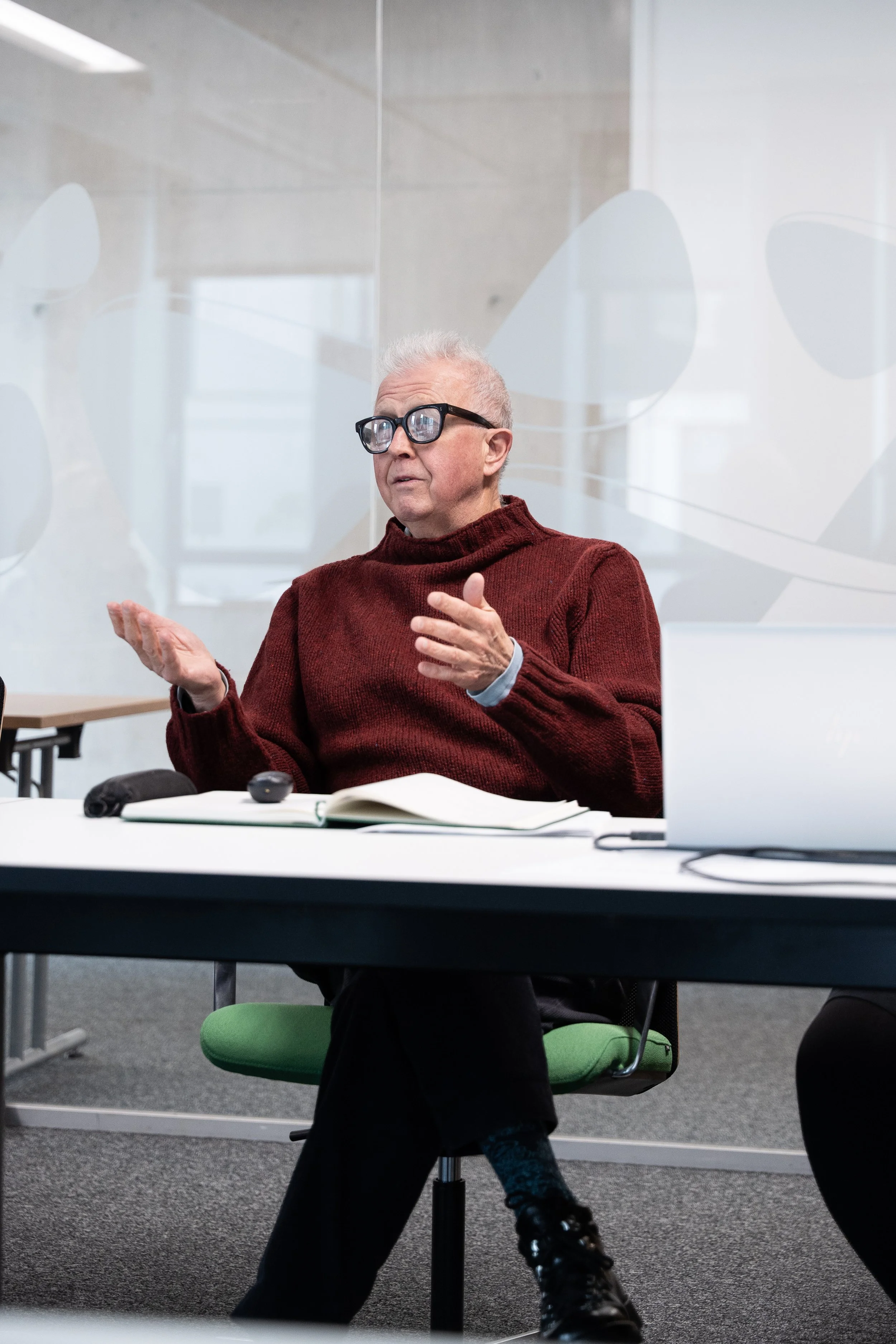
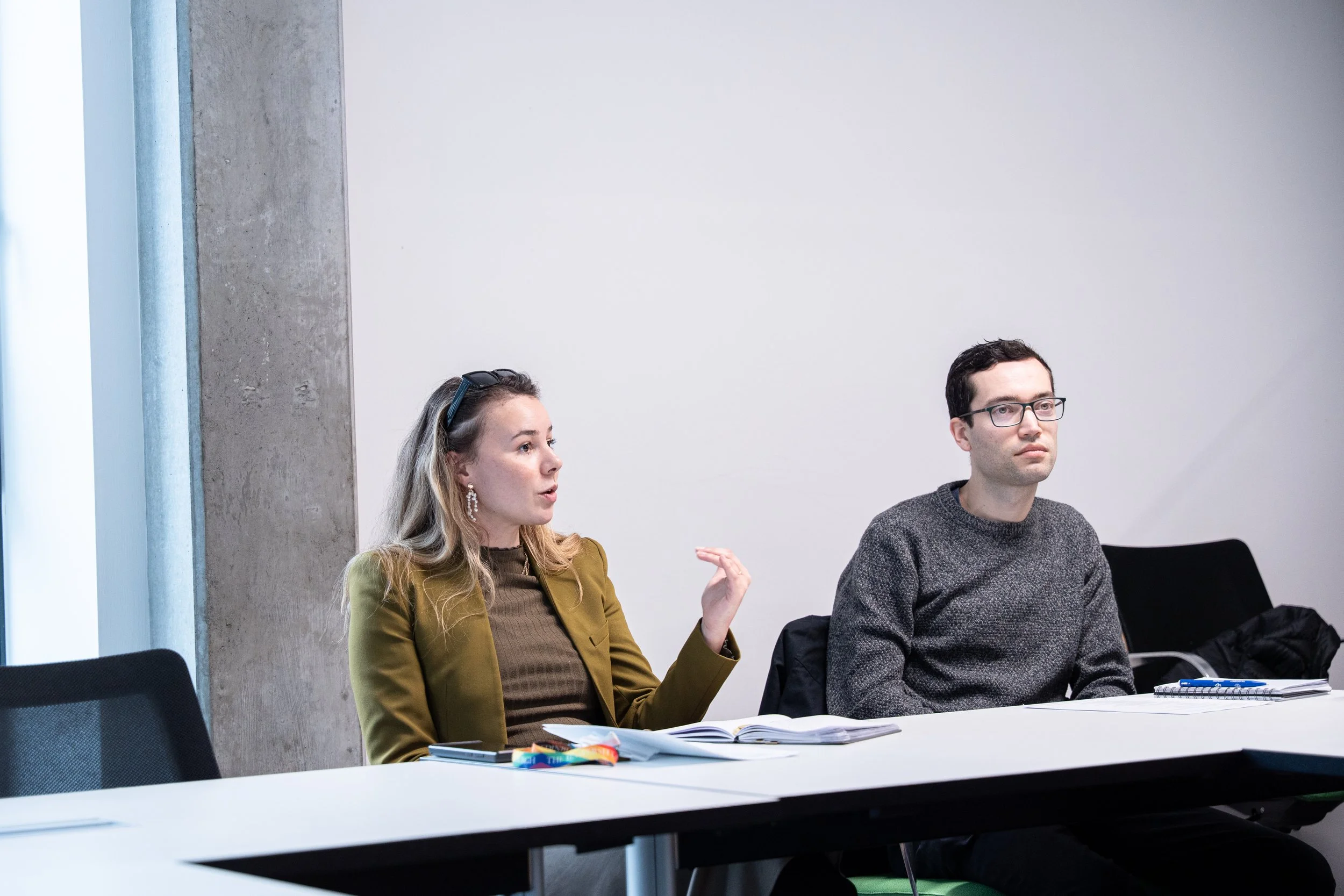
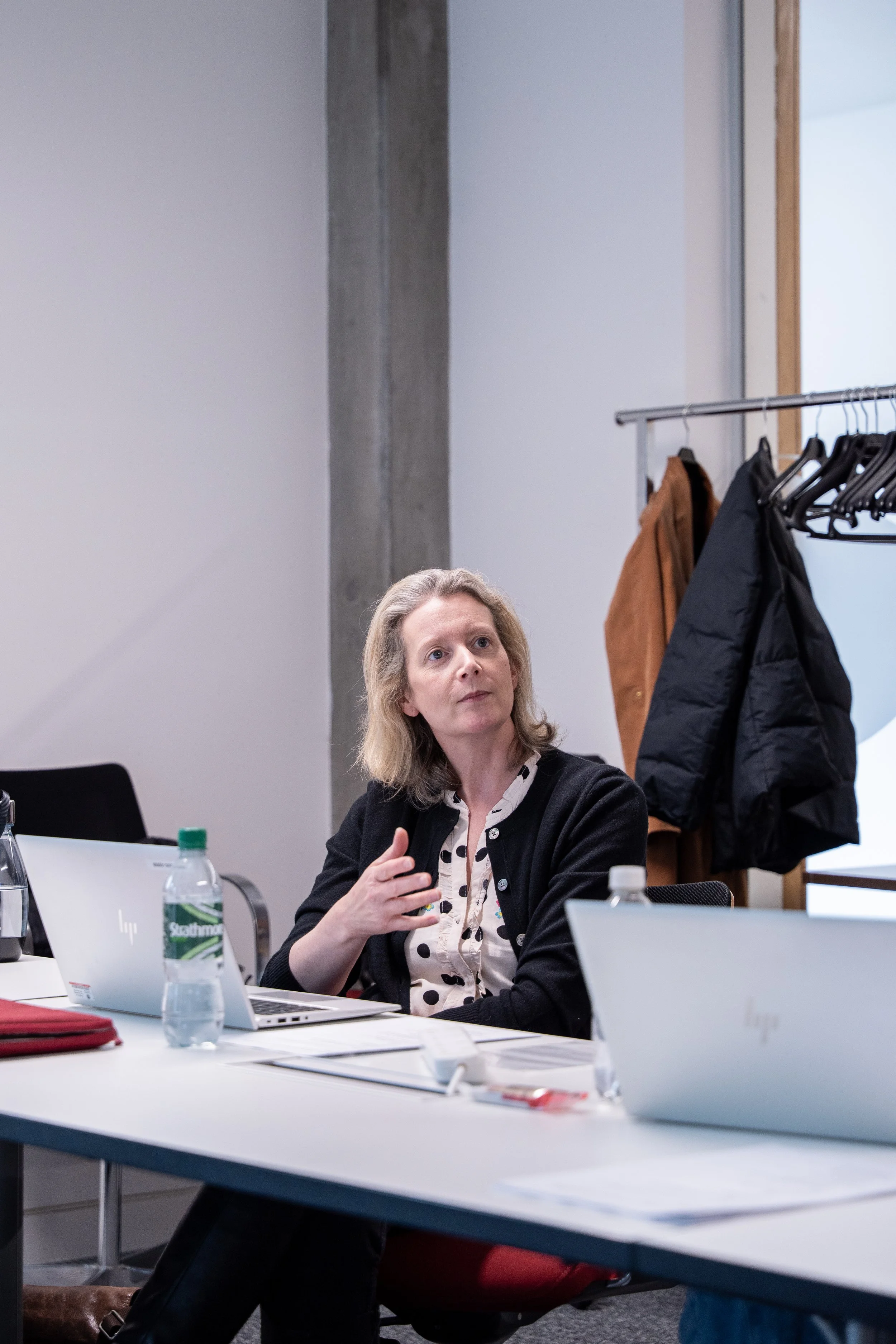
Data-Driven Innovation Fellows workshop with Zak Campbell-Lochrie, Tara Capel, Ella Campbell-McGeachan, Daria Melashenko, Claire Sowton, and Alec Wright.
Our Approach
We began with an interactive storytelling workshop focused on helping fellows understand the differences between academic and startup communication, and how those differences affect the way ideas are presented, perceived, and understood by specific audiences.
The workshop explored:
The importance of storytelling in leading a successful business
What makes an effective early-stage venture narrative
How investors, partners, and stakeholders process information
The essentials of a strong one-minute pitch
What different audiences actually want to know
How to communicate expertise without overwhelming detail
How to talk about themselves, their motivations, and their vision with confidence
The sessions combined practical frameworks, guided discussion, exercises, and handouts designed to encourage reflection and active participation.
A major focus was helping fellows recognise that communication is not simply about explaining research. It is about creating understanding, alignment, and belief – both in themselves and their idea.
Tailored One-to-One Support
Following the workshop, we held individual one-to-one sessions with each DDI fellow.
Ahead of each session, we reviewed their existing materials including pitch decks, websites, papers, summaries, and supporting content to better understand both the proposition and the individual behind it.
Each session was highly tailored and conversational. Rather than applying a rigid framework, we focused on understanding the fellow’s motivations, ambitions, concerns, and long-term goals.
We asked challenging and exploratory questions designed to:
Understand how they think about their opportunity
Encourage broader strategic thinking
Identify gaps, assumptions, or overlooked areas
Help them reframe their proposition from different perspectives
Build confidence around communicating their work
For many fellows, these conversations became eye-opening moments. Areas they had never previously considered began to emerge naturally through discussion.
Some sessions focused heavily on refining value propositions or business models. Others explored team composition, milestones, timelines, resource requirements, commercial strategy, or market positioning.
The needs were different for every fellow, and our support reflected that.
Outcomes
Across the programme, we saw a noticeable shift in confidence, clarity, and communication.
Many fellows arrived with apprehension around pitching, commercialisation, or even talking about themselves. By the end of the sessions, conversations had become more confident, focused, and forward-looking.
Importantly, the work did not stop at advice.
Using insights gathered through the sessions and our review of their materials, we helped fellows begin shaping the foundations of their equity story, giving them a clearer starting point for how to communicate their venture moving forward.
Our support also extended beyond the formal sessions through ongoing conversations, introductions, strategic guidance, and connections to relevant people, opportunities, and information.
At Koda Konsult, we see founder development as an ongoing process rather than a one-off engagement. Our role is not simply to improve a pitch, but to help people think bigger, communicate more clearly, and build the confidence needed to move ambitious ideas forward.